Friday, March 10, 2006

March 10 is Harriet Tubman Day

WESTCHESTER COUNTY, NY - Click this link to learn about this American heroine and why the 101 Congress passed the following Joint Resolution in 1990:
Resolved by the Senate and House of Representatives of the United States of America in Congress assembled, That March 10, 1990 [the anniversary of her death in 1913] be designated as “Harriet Tubman Day,” to be observed by the people of the United States with appropriate ceremonies and activities. ##

Thursday, March 09, 2006

March 8 "Lisa Tolliver Show" broadcast featured Int'l Women's Day, Harriet Tubman Day and the roles of girls and women in Boy Scouts of America


WESTCHESTER COUNTY, NY* - As announced in the invitation to today's "Lisa Tolliver Show" broadcast on New York Radio WVOX AM 1460 and www.wvox.com, today's show celebrated International Women's Day (IWD--which is today) and Harriet Tubman Day (which is March 10). My guest, Marcelle Grant, who both works for and volunteers with the Greater New York Council of Boy Scouts of America (BSA), described that organization and the roles that girls and women play in BSA and its divisions.

March 10 is Harriet Tubman Day: Mrs. Harriet Tubman Davis, a.k.a., "Moses," "Famous Heroine of Slave Days," died in Auburn, New York on March 10, 1913 in the home she founded to support elderly and ailing African Americans. Her character to the end of the line was that of devout Christian, brave warrior, unselfish philanthropist and servant. This was evident even in her final call, as reported in her March 11, 1913 Memoriam in the Auburn Citizen: “Give my love to all the churches,” and after a severe coughing spell she blurted out in a thick voice this farewell passage which she had learned from Matthew: “I go away to prepare a place for you, and where I am ye may be also.”

Harriet Tubman (as she was familiarly called, even after marrying Civil War veteran Nelson Davis in 1870, who was 20 years her junior) was born a slave who, after escaping a brutal life of bondage in Maryland, made 19 additional trips as an Underground Railroad conductor to free hundreds of other slaves, including her parents. She was also an active abolitionist, philanthropist and suffragette (who worked with Elizabeth Cady Stanton and Susan B. Anthony for women's right to vote) and a spy, scout and nurse for the Union Army.

Numerous books and websites, such as Harriet Tubman and the Underground Railroad for Children and The Harriet Tubman Historical Society provide a wealth of exciting information about her amazing life, accomplishments and honors. They also share sad facts, such as the conditions Ms. Tubman endured as a slave, cases in which she was egregiously under compensated and cheated entirely out of compensation for her work, and her unfortunate financial status when she died. However, even those low notes can't drown out the cacophony of inspirational stories and accolades, which reverberate throughout international history.

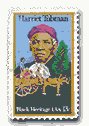
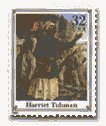
The images posted here depict two of the many honors earned by Ms. Tubman: a 13-cent and 32-cent United States postage stamp. Just a few of the many other prominent commemorations of her life and work include a medal, shawl, and invitation to visit England from Queen Victoria in 1897; her burial with full military honors in 1913; and the following Joint Resolution by the 101st Congress, which was approved in 1990:

Resolved by the Senate and House of Representatives of the United States of America in Congress assembled, That March 10, 1990 [the anniversary of her death in 1913] be designated as “Harriet Tubman Day,” to be observed by the people of the United States with appropriate ceremonies and activities.

Harriet Tubman is a role model for the Boy Scouts of America: Despite the many hardships she faced, Harriet Tubman consistently modeled amazing courage, leadership, civic and outdoorsman skills throughout her life. These are some of the traits that BSA seeks to instill in participants.

Little known facts about the Boy Scouts of America worth mentioning on IWD: Did you know that girls participate in BSA via the Venturing Division? That BSA and Girl Scouts of the USA were completely separate and distinct organizations? Or that the phrase in the Boy Scout Oath--"... To Help Other People at All Times ..."--translates into involvement in many disaster recovery activities? Click on the respective links in this paragraph to learn more about BSA and its Venturing Division and explore opportunities for youth, volunteers and job-seekers.

MEDIA LIST: Media used or referred to during the March 8 "Lisa Tolliver Show" broadcast included...

DVD: The Underground Railroad (History Channel)

Music:
*Image Attributions:
UPCOMING BROADCASTS: I'm next hosting the following shows on New York Radio WVOX AM 1460 and www.wvox.com. Please join me!
Wednesday, March 22:
Wednesday, April 12:
  • "SCORE Radio" at 1:00-1:30 pm, Eastern Time
  • The "Lisa Tolliver Show' at 1:30-2:00 pm, Eastern Time
Wednesday, April 26:
  • "The Lisa Tolliver Show" at 1:30-2:00 pm, Eastern Time with guests Flavor Flav and playwright Ray Aydelott

Friday, March 03, 2006

Join Lisa Tolliver & friends on March 8 in a celebration of Women's History Day and Harriet Tubman Day*


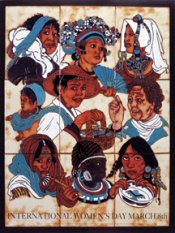
WESTCHESTER COUNTY, NY - The Lisa Tolliver Show next airs on March 8, International Women's Day (IWD). IWD's 2006 global theme is "Inspiring Potential." Join us on New York Radio WVOX AM 1460 and www.wvox.com at 1:30-2:00 pm, ET on that momentous occasion. It's two days before Harriet Tubman Day (which we'll also celebrate March 8), and smack dab in the middle of Women's History Week (which is recognized annually as the week of March 8). It's also at the front end of Women's History Month (WHM), whose theme this year is "Women: Builders of Communities & Dreams." The annual WHM theme has been chosen for the past 25 years by the National Women's History Project, whose mission is "Writing Women Back Into History."

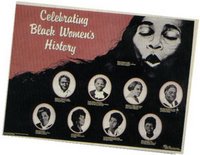
One of the great women written into history is Harriet Tubman. Therefore, it is fitting that Harriet Tubman Day (the anniversary of her death on March 10, 1913) falls during Women's History Week. (To read a memoriam to Harriet Tubman, click here.) It is also fitting that the NWHP provides a wealth of Black History Month resources, publishes a "Celebrating Black Women" poster, and is "involved in many efforts to promote multicultural women's history." Click here for the NWHP's suggestions for promoting and celebrating WHM in your community.

The Global Fund For Women (GFW) is also an informative resource. Click here to access GFW's ideas and tips for celebrating IWD and Women's History Month. Click here for GWF's fundraising aides.

Here are some resources for learning about and nominating important women in history:

About.com's Women's History Month - African American Women

National Women's Hall of Fame

Scholastic's Honor Roll of Notable Women

I learned first-hand last year, from the unexpected deaths last year of my Aunt Frances and Dad and the three-car accident that I miraculously survived, how important it is to honor those you admire while they're still here. Why not nominate your heroine? She'll certainly be thrilled, as I was when I learned that fans had nominated me to win a 2005 Emmis Communications Phenomenal Women Award .

* Image attributions:

Tuesday, February 28, 2006

Some New York City Destinations for African American History Month

Image attribution: from Finding Priscilla's Children: The Roots and Branches of Slavery (on exhibit at the New York Historical Society through March 19, 2006) Accessed February 19, 2006.

WESTCHESTER, NY - Throughout February, places of worship, community groups, cultural entities, families and most media outlets are offering a satisfying smorgasbord of African American History Month offerings. A few destinations in the New York metropolitan area that I highly recommend include:

Exhibits:

The landmark exhibition "Slavery in New York" (extended through March 26, 2006)

Finding Priscilla's Children: The Roots and Branches of Slavery (through March 19, 2006)

Facsimile of the Emancipation Proclamation (through March 26, 2006)

  • Also see: NYC & Co.'s "Celebrating NYC's African-American Heritage" and local listings

Events:

Theater:

  • "The Color Purple"
  • American Place Theater held performances of Black Boy, Manchild in the Promised Land, and Zora. Click here to register for news and notices of upcoming events.
  • Also see: NYC & Co.'s "Celebrating NYC's African-American Heritage" and local listings

Historical Sites and Tours (excerpted from NewYorkology: A New York Travel Guide):

Historical Sites:

###


Sunday, February 26, 2006

"Say It Loud, I'm Black and I'm Proud!" A must-hear during February/African American History Month

WESTCHESTER COUNTY, NY - So little time, so much to share. On the radio, that is. In my 90 minutes of air time on New York Radio WVOX AM 1460 and www.wvox.com during African American History Month*, I missed the beat by playing only one of the two must-hear songs during February. I opened and closed the February 8 Lisa Tolliver Show with one: the Black National Anthem/"Lift Every Voice and Sing." (Click here to hear it, click here for the lyrics.) I never did play James Brown's, "Say It Loud, I'm Black and I'm Proud!"

Don't leave February without it! Click here to hear a sample of "Say It Loud, I'm Black and I'm Proud!" Click here to read the lyrics. At that site, you can also listen to Brown's opening statement at his "Say It Live & Loud: Live in Dallas" concert in 1968, and other songs by this singer/activist known as "the Godfather of Soul," "the Hardest Working Man in Show Business," "Mr. Dynamite," and "Soul Brother Number One." You can also click here to access James Brown's bio, interviews and photos at VH1.com.

* My February 2006 broadcasts included:

Thursday, February 23, 2006

Westchester County Emergency Volunteer Reserves-Medical Reserve Corps Launches Emergency Preparedness Tips Series on the 2/22/06 "Lisa Tolliver Show"


WESTCHESTER COUNTY, NY - The Westchester Emergency Volunteer Reserves - Medical Reserve Corps (WEVR-MRC) and WEVR-trainee, Lisa Tolliver, have teamed up to broadcast regular Emergency Preparedness Tips. Emergency Preparedness Tip #1 - "Develop an Emergency Plan," aired February 22, 2006 on "The Lisa Tolliver Show" on New York Radio WVOX AM 1460 and www.wvox.com.

WEVR-MRC's advice for developing an effective escape plan was especially timely (read the details below), since the African American History Month segment on which it aired featured a tour of the Underground Railroad: the network of supporters and secret routes the helped runaway slaves escape slavery in the American South. Hear future safety tips on "Lisa Tolliver Show" every 2nd and 4th Wednesday at 1:30-2:00 pm, Eastern Time. The show's "four-eyed" mission is to inform, instruct, intrigue and inspire listeners about what's happening in the world of non-profits and current affairs.

For information on how you can join the Westchester Emergency Volunteer Reserves - Medical Reserve Corps, contact The Volunteer Center at 866-VOL-CALL or visit www.volunteer-center.org/ or westchestergov.com. To read about the January 25, 2006 "Lisa Tolliver Show" featuring WEVR-MRC, click here.

Wednesday, February 22, 2006

Lisa Tolliver tours the history of small business, slaves and the Underground Railroad on "SCORE Radio" and "The Lisa Tolliver Show" (Feb. 22, 2006)

WESTCHESTER COUNTY, NY - Steal away for an hour to enjoy Part II of my on air African American History Month celebration on New York radio WVOX at AM 1460 and www.wvox.com . Today's special broadcast will span the time slots reserved for SCORE: Counselors to America's Small Business (at 1:00-1:30, Eastern Time) and The Lisa Tolliver Show (at 1:30-2:00 pm, Eastern Time). We'll acknowledge the traders, farmers, artisans and other small businesspeople who have historically been the backbone of the American economy, the roles of slaves and free blacks in those arenas, and take a tour on the History Channel's "Underground Railroad DVD". (Click the link to read my February 16 blog article: "Prerequisite stopover during African American History Month: The Underground Railroad. All aboard! "). We'll also launch the Emergency Safety Tips series provided by the Westchester Emergency Volunteer Reserves-Medical Reserve Corps (WEVR-MRC), wish a hearty happy birthday to my Aunt Mary Ware (who at age 105 is the richest source of African American history in my family), and share some oral history about our Cousin Fannie, who was a slave in Virginia.

SCORE Radio: Counselors to America's Small Business airs every 2nd and 4th Wednesday at 1:00-1:30 pm, Eastern Time on WVOX and www.wvox.com. It is sponsored by Whitney Radio and SCORE Chapter 306. Phone SCORE at 914 948 3907. Visit SCORE at 120 Bloomingdale Road, White Plains, NY 10601 or at www.score.org. To access my SCORE profile, click here.

The Lisa Tolliver Show airs every 2nd and 4th Wednesday at 1:30-2:00 pm, Eastern Time on WVOX and www.wvox.com. It is sponsored by Whitney Radio and 360 MERIDIAN. Phone Lisa Tolliver at 309 279 7528 or visit www.lisatolliver.com.

My March 8 and March 22, 2006 broadcasts on The Lisa Tolliver Show will celebrate Harriet Tubman Day (which is March 10) and Women's History Month.

Thursday, February 16, 2006

Prerequisite stopover during African American History Month: The Underground Railroad. All aboard!

Image attribution: "Bury Me in a Free Land": The Abolitionist Movement in Indiana, 1816-1865, Indiana Historical Bureau. Accessed February 19, 2006 at www.statelib.lib.in.us/www/ihb/ugrr/buryme2.html.

WESTCHESTER COUNTY, NY - Countless sites and routes comprised it (click the respective links to access those of Harriet Tubman and another traced by Andy Cohen). Untold numbers of "passengers"*, stationmasters and conductors ** traveled and maintained it. Yet the Underground Railroad (also known as the "freedom train," or "gospel train") was not a particular place, vehicle or organization. Rather, the term refers to the loosely constructed, secret network of escape routes and supporters that helped intrepid African Americans to flee bondage in America. Their destination: freedom, a.k.a. the "promised land" or "heaven." (Click here for details about the Underground Railroad. Click here to read about the etymology (i.e., origin) of the term.)

"Before I'll be a slave I'll be buried in my grave and go home to my Lord and be free." (lyrics to song known alternately as "O Canaan" and "Oh, Freedom") (audio)
Participation in the Underground Railroad (the "first Civil Rights movement") was perilous for both escapees. and those who helped them. The freedom-seekers and their pilots often traveled on foot and with very little supplies through swamps, bayous, forests, and waterways, braving the natural hazards posed by wildlife and the environment. Slave catchers, their hunting dogs and reward-seekers also posed constant threats, even in the freed states. Moreover, escaping slavery was a crime and those who were caught faced severe penalties (as depicted in a 1759 Runaway Slave Ad and dramatized by Alex Haley in Roots: The Saga of An American Family). Even freed African Americans were enslaved on the slightest pretext and unscrupulous traders often kidnapped freedmen and sold them south into bondage.

"Swing Low, Sweet Chariot" (lyrics and music to Harriet Tubman's favorite song):

Those caught breaking the law by abetting the "fugitives" also took great risks; if caught, they could be severely fined, imprisoned, lynched and--if black--sold into slavery. However, participants in the Underground Railroad heroically risked the odds. Patrick Henry's famous Revolutionary War cry on March 23, 1775, "Give me liberty or give me death!"--although expressed in far different circumstances--closely paralleled the lyrics to "Oh, Freedom" (a.k.a., "O Canaan"), a song sung by those who braved substantial perils to involve themselves with the Underground Railroad ("Before I'll be a slave I'll be buried in my grave and go home to my Lord and be free").

"I always tole God, I'm gwine to hold stiddy on to you an' you've got to see me trou (through)." - Harriet Tubman to fugitives.

Only a small percentage of slaves braved a "passage" on the Underground Railroad. And although those intrepid souls who did shared a common goal, their points of disembarkation varied widely. As the National Park Service explains at "Learn About the Underground Railroad," common destinations were free African American communities in the South, to the North and out west. Other escapees fled the USA entirely, settling in Canada, Mexico, the Caribbean, and other foreign countries. The maritime industry and military service (from the colonial era to the Civil War) provided other popular avenues to freedom.

Steal Away (music), (lyrics):

Certain code words, secret gestures, stories, symbols and songs were employed as communications and guiding devices for escapees and Underground Railroad supporters. Click on the following links to learn the significance of lanterns, to read, "The Underground Railroad in Action: Communication and Codes," and to learn about other secret symbols. Click the following link to read the lyrics of some code songs. And click on the respective titles to hear code songs such as "Steal Away," "Free at Last, "Oh Freedom" (a.k.a., "O Canaan"), and "Wade in the Water"*** and to access other songs of that era via the Websites: Kentucky's Underground Railroad: Passage to Freedom, Timely Tunes, Voices Across Time and Coco Jams: African American Civil Rights (Freedom) Songs.

"Wade in the Water" (music):

It is impossible to document all of the facts and fates of those who with ties to the Underground Railroad. By necessity, the many details about the escape routes, identities of sympathizers and protectors, and "itineraries" of escapees seeking safe passage were cloaked in secrecy. Moreover, the informal support network spanned a broad spectrum. It included individuals and organizations representing many ethnicities, religions and socio-economic strata, and frequently relied upon those who provided ongoing protection and support as well as upon situational angels who provided spontaneous assistance.

"Roll, Jordan Roll" (music) - the title of a song that symbolized the border between slave states and freedom states:

Nonetheless, oral histories and documents have helped researchers to document some of the routes, sites, people and experiences that comprise the history of the Underground Railroad. Some of the heroes tied to this history include escaped slaves (e.g., Henry Bibb, Frederick Douglas and Harriet Tubman), Native Americans, members of such religious groups as the Quakers, Methodists, and Baptists. and outspoken abolitionists such as William Lloyd Garrison, Mary Ann Shadd and William Still.

There is a wealth of resources about the Underground Railroad. Among them are several extremely informative Websites, including:

Excellent resources about the slavery throughout the world and throughout history are available at the UNESCO Culture Sector site, 2004: The International Year to Commemorate the Struggle Against Slavery and its Abolition.
FYI, the acceptance of 360 MERIDIAN as a National Parks Service Network to Freedom Partner will support our "four-eyed" mission to inform, instruct, intrigue and inspire audiences, in this case on the subject of African American history and the Underground Railroad.
* Supporters often referred to passengers on the Underground Railroad using code words such as: "baggage," "bundles of wood," "cargo," "dry goods" (female freedom seekers), "freight," "hardware" (male freedom seekers), and "parcels," according to Owen Sound's Black History Glossary. In contrast, those who supported slavery referred to freedom-seekers as "fugitives."
** Supporters of the underground railroad were often referred to using the code words: "agents," "conductors," “a friend with friends," "guides," "pilots," "preachers," "safe house keepers," "shepherds," "speakers," and "station masters," according to Owen Sound's Black History Glossary and Underground Railroad: American Civil War History.
*** The "Wade in the Water" audio file link on this site is provided by Kim and Reggie Harris' CD entitled, Steal Away: Songs from the Underground Railroad).
###
Wednesday, February 08, 2006

On the February 8, 2006 "Lisa Tolliver Show," playwright Raymond Aydelott helps celebrate African American History Month and Valentine's Day


WESTCHESTER COUNTY, NY - February is African American History month (click here for AAHM resources). I believe that any well-rounded AAHM celebration should address accomplishments and struggle, family and church, love and art. Of course, foodways are important elements in African American culture, too. Alas, covering that base would have thrown today's 30 minute show into overtime, but my guest and old friend, Raymond Aydelott, and I covered all of the other bases. We also touched home on another February celebration: Valentine's Day (click here for V-Day resources).

Ray is an African American playwright and master storyteller. In today's show, he shared excerpts from his latest work-in-progress, "Pastor Mobile's Ticket Booth." Whenever Ray reads from that script, I wipe tears of laughter. The comedic plot centers around a church whose streetwise minister introduces a $2.50 admission fee. The reactions of the cast of colorful characters and ensuing scenes are vividly entertaining. Ray has other projects in various stages of development, including "The Janitor's Closet," a serious drama that we'll discuss in an upcoming broadcast. Stay tuned.

Ray's a personable, hardworking guy whose GQ exterior houses a prolific writer and entertainer. His chocolate brown good looks make him an ideal model for a Valentine's Day Card. As he shared on air, Ray's credits include acting, bodybuilding and fashion modeling. His talent and passion for writing have garnered moral support and referrals from long-term friends Rico Drayton, a.ka. "Flava Flav" ("Yeeeaaaaaaaahhhhhhh Boyyyy!!!!!! Hah hah! That's right), and "The King of Nostalgia," a.k.a., "The Wizard of Was," nee Joe Franklin. That's led to audiences with luminaries such as Magic Johnson. The outcome: Ray's collaborated on various projects and been asked to customize scripts and concepts for particular stars.

Impressive, indeed. But serious artists need time to write and funding to move their own productions, as it puts it, "out of the darkness" (of the writer's imagination) and "into the light" (of stage and screen). That process takes longer for writers like Ray, whose goal is to create quality, family entertainment, rather than for "streakers" (who churn out, for a quick buck, shallow or profane products that pimp street culture). Consequently, Ray’s kept his day jobs while seeking actors, investors and others with a genuine passion for theater and film to participate in his productions. For talented professionals who truly love the craft, he believes the money will follow. So do I. Interested? Contact Ray via the 360 MERIDIAN message center at (01) 309.279.7528.

Audio media played during the show included:

  • The Black National Anthem: "Lift Every Voice and Sing." The clip we played on air was from A Splash of Pops / Keith Lockhart. 09026 63516-2. BMG Entertainment, 1999. (Written by: John Rosamond Johnson - James Weldon Johnson; arranged by: Charles Floyd; performed by: the Tanglewood Festival Chorus, the Boston Pops Gospel Choir, and members of the Boston Men's Gay Chorus.) To listen online to an audio clip performed by Women of the Calabash, click here. To read the lyrics, click here. To listen to other audio clips online click here.
  • An aural Valentine’s Day dedication to my late father: "My Heart Belongs to Daddy." The clip we played on air was from Rosemary Clooney Sings the Music of Cole Porter, Disc 2. Concord Jazz CCD6-4933-2, Concord Records, Inc., 2000. (Written by: Cole Porter (C. Albert P.) for the 1938 show: “Leave it to Me”; sung by: Rosemary Clooney. At Julie Andrews.org/A Tribute to Julie Andrews, you can hear the song and read the lyrics online by clicking the appropriate links posted 3/4 of the way down the page under "Julie Andrews Hour (ABC-TV, 11 Oct 1972)," i.e., My Heart Belongs to Daddy [757KB, 1:50, Lyrics].
  • Hank Aaron, “Address to Congress,” June 18, 1974. The clip we played on air was from Great Speeches of the 20th Century, Volume 3. Rhino Word Beat, Rhino Records, Inc., 1991. To listen online at the Authentic History Center, click here.

I'll next be on air February 22, 2006. I'll be hosting "SCORE Radio: Counselors to America's Small Business" at 1:00-1:30 p.m., Eastern Time and "The Lisa Tolliver Show" at 1:30-2:00 p.m., Eastern Time. My topics: "Minorities and Business: We've Come a Long Way, Maybe," and other timely tidbits. Please join us on New York Radio WVOX AM 1460 and www.wvox.com. Listeners can also hear and share via call-in line at (01) 914.636.0110. ###

Wednesday, February 01, 2006

Two Westchester County Programs ease the bite of home energy bills


WESTCHESTER COUNTY, NY - The War on Terror and natural disasters have hiked fuel costs to unmanageable levels for many Americans. In response,Westchester County, NY is helping local residents beat back home heating costs.

Two offerings--The CHEAP (County Home Energy Assistance ) and the HEAP (Home Energy Assistance Program) --can assist Westchester County residents who meet certain income guidelines. According to the Westchetser.Gov. com web page coded, "Gasoline and Katrina,"

"CHEAP - The County's Home Energy Assistance Program offers a one-time payment of $100 to eligible households that apply before March 31. A family of four with a maximum income of $53,000 would qualify. Call 995-6759 or click here for more information and a CHEAP application.

"HEAP - Residents with lower incomes may be eligible for the federal HEAP program administered by Westchester County. Residents interested in applying for HEAP can schedule an appointment to determine eligibility. Call (01) 914-995-5619 or click here for more information and a HEAP application."

The "Gasoline and K atrina" page also links to hot tips for cutting costs by conserving energy:

Readers are encouraged to contact their local and state government agencies for additional resources offering assistance with home and business energy costs. ###