Showing posts with label VETERANS HISTORY PROJECT. Show all posts

Sunday, May 25, 2014

Memorial Day Weekend Message


Greetings:

I hope all readers in the USA and Americans currently overseas are having a safe and enjoyable Memorial Day weekend.

Don't forget to reserve a minute of silence at 3 pm, Monday, to pay tribute to the U.S. men and women who died during military service! Another common tradition among many American families (like mine), is to utilize this occasion to pay tribute to other loved ones who have died as well as to living servicemen and women. Visit this page to access Memorial Day Resources from the U.S. Veterans Administration.

You may or may not know I"m a Veterans History Project Official Founding Partner-NY (my firm, 360 MERIDIAN, LLC is first on the list). To that end, I'm happy to report the following relevant find this weekend: ROMVETS: Military women who have turned sword into pen (I just joined their Twitter feed). Check them out, and read their publications!

Wednesday, August 26, 2009

The Lion Slept Last Night: Remembering Senator Ted Kennedy


GREATER NEW YORK - Saddened and profoundly touched by the news that the Liberal Lion (of the Senate) slept last night, I feel compelled to jot a few words remembering prolific, highly accomplished Senator Edward Moore Kennedy (D-Massachusetts). Personal politics, opinions about Citizen Ted's private life - and even nationality - notwithstanding, it's well-nigh impossible for any adult on the planet to be unaffected.

Personal recollections tend to be egocentric; mine are no exceptions. For instance, as a Veterans History Project Official Partner/New York, I am extremely interested in the experiences and contributions of America's military servicemen and women. That includes the Kennedy brothers.

As did older brothers Joe, Jr. (who made the ultimate sacrifice), Jack, and Bobby (all of whom served in the Navy), Ted served in the United States military (Army, 1951-1953). Later, during his 43 years in the United States Senate, the handsomest Kennedy brother (and perhaps the most controversial) actively addressed military issues, such as cheating on promotional exams, armor issues, and military blogs.

A more poignant memory of the tireless, influential public servant and one of America's most famous Irishmen was made the day I graduated from Harvard. After receiving my diploma, I'd stood on the crowded steps at Dunster House, scanning the crowd. "Where's that Ted?" I complained to my roommate, whose beau had promised to snap our photos.

Unbeknownst to me, Ted Kennedy was standing immediately behind me. He stepped up close, and when I turned around, he smiled mischievously, stuck out his hand, and said something like, "Hi, I'm Ted Kennedy. How do you work that camera?"

Hence, one of the first utterances by this newly minted Ivy Leaguer: "Humina, humina, humina!"###


Wednesday, May 27, 2009

Memorial Day and Veterans Day: what and when are they, and what's the difference?

Because my large, extended family boasts of many military veterans and because I'm a Veterans History Project Official Partner/New York, I often find myself answering two common questions about Memorial Day and Veterans Day:
  1. Exactly what and when are they? and
  2. What's the difference between them?
Here are the quick-and-dirty responses:
  • WHAT:
Memorial Day (formerly known as "Decoration Day"), and Veterans Day (also known worldwide as "Armistice Day," "Remembrance Day," "Remembrance Sunday," "Poppy Day, " "National Day," "Polish Independence Day," and the "Day of Peace") are two USA federal holidays - roughly six months apart - that honor America's military veterans. Memorial Day honors those who have fallen while in service to the country, while Veterans Day honors all who have served in the US military, both living and deceased.
  • WHEN:
Memorial Day is currently celebrated on the last Monday in May (although there is support for reverting to the original, May 30 date or Armed Forces Day weekend - the third weekend in May - to focus attention on the holiday's intended meaning). Veterans Day is celebrated in the USA on November 11.

It's easy to confuse all of these interrelated holiday names, aliases, dates and meanings, even after reading about them on official USA government sites, such as US Information Agency>>Celebrate! Holidays in the USA and USA.gov>>American Holidays. For one thing, articles such as the US Department of Veterans Affairs' "History of Memorial Day" and "History of Veterans Day" highlight the fact that both holidays have undergone changes in name, date, and scope since their inceptions.

Consequently, as Wikipedia>>Memorial Day notes, in addition to the federally recognized remembrances, some communities continue to honor the original traditions, while still others follow parochial practices, as well as rites unrelated to the holiday's intention. For example, my family adheres to a popular Memorial Day tradition of decorating the graves of all loved ones who predeceased us; we don't confine our commemorations to military veterans or those who died during wartime. (Of course, most of my family's plots feature veteran and civilian graves situated side-by-side, or stacked atop each other.)

Further diffusing Memorial Day's meaning is its extension, to three days, of the weekend that symbolically starts the summer. Throughout the USA, May's final weekend kicks off many outdoor (and some indoor) activities, and the beginning of boating, beach and barbecue season. Consequently, most Americans (myself included) mark Memorial Day weekend not only as a time for reflection and remembrance, but also for recreation.

To "help re-educate and remind Americans of the true meaning of Memorial Day," the White House passed a "National Moment of Remembrance" resolution in December 2000. It asks all Americans "to pause for one minute at 3:00 p.m. (local time) on Memorial Day, to remember and reflect on the sacrifices made by so many to provide freedom for all."

Like Memorial Day, Armistice Day - Veterans Day's precursor in the USA - also serves mixed purposes, and thereby generates some confusion. The holiday was initially conceived as an international commemoration of the end of World War I. However, as Wikipedia>>Armistice Day notes, World War I ended on different days in different locations, and many countries have adapted the Armistice Day concept in a variety of ways:
Armistice Day is the anniversary of the symbolic end of World War I on 11 November 1918. It commemorates the armistice signed between the Allies and Germany at Rethondes, France, for the cessation of hostilities on the Western Front. The cease-fire took effect at eleven o'clock in the morning — the "eleventh hour of the eleventh day of the eleventh month". While this official date to mark the end of the war reflects the cease fire on the Western Front, hostilities continued in other regions, especially across the former Russian Empire and in parts of the old Ottoman Empire.

The date was declared a national holiday in many allied nations, to commemorate those members of the armed forces who were killed during war. An exception is Italy, where the end of the war is commemorated on 4 November, the day of the Armistice of Villa Giusti. Called Armistice Day in many countries, it was known as National Day in Poland (also a public holiday) called Polish Independence Day. After World War II, the name of the holiday was changed to Memorial Day[sic] in the United States and to Remembrance Day in countries of the British Commonwealth of Nations. Armistice Day remains an official holiday in France. It is also an official holiday in Belgium, known also as the Day of Peace in the Flanders Fields.

I hope this write-up (and its linked resources) fulfilled its four-eyed mission: to inform, instruct, intrigue and inspire. If you'd like for me to address your group, or feature you in my media or cultural documentation programming, feel free to contact me.###


Saturday, February 16, 2008

Black History Month, Video: "The first white man I ever saw was black"


The Alaska Highway (also known as the Alaska-Canadian - or Alcan - Highway), was built in eight months in 1942. The international roadway - which extended 1,523 miles (2,451 kilometers) northwest from Dawson Creek, British Columbia to Fairbanks, Alaska and navigated through some challenging virgin territory - was nicknamed the "Oilcan Highway" by the United States servicemen who built it, discarding empty oil containers along the way. Sources at Answers.com>>Alaska Highway report: over 10,000 American soldiers, approximately one-third of them black, constructed the highway as "an emergency war measure to provide an overland military supply route" to military forces in Alaska during World War II.

Completing the Alcan Highway, in record time, "was a significant engineering feat because of the difficulties of terrain and weather." On the human side, bitterly cold temperatures and frostbite sent some troops searching for warmer clothing and shelter.

During one such foray, recounts Modern Marvels: Alcan Highway, some black soldiers stumbled upon a Canadian Indian village. They left a lasting impression. Years later, one villager remarked: "The first white man I ever saw was black."

As this is Black History Month, and I am a Veteran's History Project Official Partner, I highly recommend watching this informative, inspirational History Channel program. Modern Marvels: Alcan Highway shares many incredible stories about the construction of an engineering marvel, about the creation of landmark sites (such as Signpost Forest at Watson Lake, pictured below right), and about black soldiers who persevered - and made heroic contributions - despite segregation and racial discrimination during an already-challenging project.
For example, heavy construction equipment was in scarce supply and was assigned only to white troops. This left the black servicemen vulnerable to untrue accusations that they were too ignorant to use heavy machinery. In response, some creatively assertive black soldiers disproved that vicious rumor, and substantially contributed to the roadway's completion, by "borrowing" heavy equipment from sleeping white troops at night and using it to build miles of roadway before daybreak. In the morning, white servicemen would awaken to find their machinery intact, and long, new stretches of roadway punctuated by signs that read: "Completed by [Black Regiment's Name]."

That's not all. There's much more to Modern Marvels: Alcan Highway. Get the complete story on VHS or on the History Channel.

IMAGES:


Tuesday, August 07, 2007

On August 8, 2007, I will interview Gerd Leonhard, CEO - Sonific and Bob Patrick, Director - Veteran's History Project


Tomorrow, August 8, 2007, I will be hosting two shows back to back on New York Radio WVOX 1460 AM and www.wvox.com. At 11:30 AM-noon, Eastern Time, I will interview Gerd Leonhard - CEO, Sonific and co-author, The Future of Music on 'SCORE Radio: Counselors to America's Small Business'. Then, without missing a beat, from noon-12:30 PM, I will interview Robert W. ("Bob") Patrick, Director of the Veterans History Project (of the Library of Congress American Folklife Center).

I've posted about Sonific and the Veterans History Project before, but tomorrow will be my first on-air talk with the men who run those operations. Come join us, and feel free to talk with them, too!

You can hear and share in the show by phoning our call-in line: (01) 914 636 0110. If you're listening, we're listening. Talk with us!

The show is made possible, in part, by support from The Field (they grow art!) and USPS (they deliver!). We welcome your support, as well! Contributions, donations and sponsorships are tax deductible. Moreover, matching funds can double, even triple your money!


Thursday, March 09, 2006

March 8 "Lisa Tolliver Show" broadcast featured Int'l Women's Day, Harriet Tubman Day and the roles of girls and women in Boy Scouts of America


WESTCHESTER COUNTY, NY* - As announced in the invitation to today's "Lisa Tolliver Show" broadcast on New York Radio WVOX AM 1460 and www.wvox.com, today's show celebrated International Women's Day (IWD--which is today) and Harriet Tubman Day (which is March 10). My guest, Marcelle Grant, who both works for and volunteers with the Greater New York Council of Boy Scouts of America (BSA), described that organization and the roles that girls and women play in BSA and its divisions.

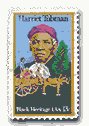
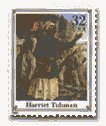
March 10 is Harriet Tubman Day: Mrs. Harriet Tubman Davis, a.k.a., "Moses," "Famous Heroine of Slave Days," died in Auburn, New York on March 10, 1913 in the home she founded to support elderly and ailing African Americans. Her character to the end of the line was that of devout Christian, brave warrior, unselfish philanthropist and servant. This was evident even in her final call, as reported in her March 11, 1913 Memoriam in the Auburn Citizen: “Give my love to all the churches,” and after a severe coughing spell she blurted out in a thick voice this farewell passage which she had learned from Matthew: “I go away to prepare a place for you, and where I am ye may be also.”

Harriet Tubman (as she was familiarly called, even after marrying Civil War veteran Nelson Davis in 1870, who was 20 years her junior) was born a slave who, after escaping a brutal life of bondage in Maryland, made 19 additional trips as an Underground Railroad conductor to free hundreds of other slaves, including her parents. She was also an active abolitionist, philanthropist and suffragette (who worked with Elizabeth Cady Stanton and Susan B. Anthony for women's right to vote) and a spy, scout and nurse for the Union Army.

Numerous books and websites, such as Harriet Tubman and the Underground Railroad for Children and The Harriet Tubman Historical Society provide a wealth of exciting information about her amazing life, accomplishments and honors. They also share sad facts, such as the conditions Ms. Tubman endured as a slave, cases in which she was egregiously under compensated and cheated entirely out of compensation for her work, and her unfortunate financial status when she died. However, even those low notes can't drown out the cacophony of inspirational stories and accolades, which reverberate throughout international history.

The images posted here depict two of the many honors earned by Ms. Tubman: a 13-cent and 32-cent United States postage stamp. Just a few of the many other prominent commemorations of her life and work include a medal, shawl, and invitation to visit England from Queen Victoria in 1897; her burial with full military honors in 1913; and the following Joint Resolution by the 101st Congress, which was approved in 1990:

Resolved by the Senate and House of Representatives of the United States of America in Congress assembled, That March 10, 1990 [the anniversary of her death in 1913] be designated as “Harriet Tubman Day,” to be observed by the people of the United States with appropriate ceremonies and activities.

Harriet Tubman is a role model for the Boy Scouts of America: Despite the many hardships she faced, Harriet Tubman consistently modeled amazing courage, leadership, civic and outdoorsman skills throughout her life. These are some of the traits that BSA seeks to instill in participants.

Little known facts about the Boy Scouts of America worth mentioning on IWD: Did you know that girls participate in BSA via the Venturing Division? That BSA and Girl Scouts of the USA were completely separate and distinct organizations? Or that the phrase in the Boy Scout Oath--"... To Help Other People at All Times ..."--translates into involvement in many disaster recovery activities? Click on the respective links in this paragraph to learn more about BSA and its Venturing Division and explore opportunities for youth, volunteers and job-seekers.

MEDIA LIST: Media used or referred to during the March 8 "Lisa Tolliver Show" broadcast included...

DVD: The Underground Railroad (History Channel)

Music:
*Image Attributions:
UPCOMING BROADCASTS: I'm next hosting the following shows on New York Radio WVOX AM 1460 and www.wvox.com. Please join me!
Wednesday, March 22:
Wednesday, April 12:
  • "SCORE Radio" at 1:00-1:30 pm, Eastern Time
  • The "Lisa Tolliver Show' at 1:30-2:00 pm, Eastern Time
Wednesday, April 26:
  • "The Lisa Tolliver Show" at 1:30-2:00 pm, Eastern Time with guests Flavor Flav and playwright Ray Aydelott

Thursday, February 16, 2006

Prerequisite stopover during African American History Month: The Underground Railroad. All aboard!

Image attribution: "Bury Me in a Free Land": The Abolitionist Movement in Indiana, 1816-1865, Indiana Historical Bureau. Accessed February 19, 2006 at www.statelib.lib.in.us/www/ihb/ugrr/buryme2.html.

WESTCHESTER COUNTY, NY - Countless sites and routes comprised it (click the respective links to access those of Harriet Tubman and another traced by Andy Cohen). Untold numbers of "passengers"*, stationmasters and conductors ** traveled and maintained it. Yet the Underground Railroad (also known as the "freedom train," or "gospel train") was not a particular place, vehicle or organization. Rather, the term refers to the loosely constructed, secret network of escape routes and supporters that helped intrepid African Americans to flee bondage in America. Their destination: freedom, a.k.a. the "promised land" or "heaven." (Click here for details about the Underground Railroad. Click here to read about the etymology (i.e., origin) of the term.)

"Before I'll be a slave I'll be buried in my grave and go home to my Lord and be free." (lyrics to song known alternately as "O Canaan" and "Oh, Freedom") (audio)
Participation in the Underground Railroad (the "first Civil Rights movement") was perilous for both escapees. and those who helped them. The freedom-seekers and their pilots often traveled on foot and with very little supplies through swamps, bayous, forests, and waterways, braving the natural hazards posed by wildlife and the environment. Slave catchers, their hunting dogs and reward-seekers also posed constant threats, even in the freed states. Moreover, escaping slavery was a crime and those who were caught faced severe penalties (as depicted in a 1759 Runaway Slave Ad and dramatized by Alex Haley in Roots: The Saga of An American Family). Even freed African Americans were enslaved on the slightest pretext and unscrupulous traders often kidnapped freedmen and sold them south into bondage.

"Swing Low, Sweet Chariot" (lyrics and music to Harriet Tubman's favorite song):

Those caught breaking the law by abetting the "fugitives" also took great risks; if caught, they could be severely fined, imprisoned, lynched and--if black--sold into slavery. However, participants in the Underground Railroad heroically risked the odds. Patrick Henry's famous Revolutionary War cry on March 23, 1775, "Give me liberty or give me death!"--although expressed in far different circumstances--closely paralleled the lyrics to "Oh, Freedom" (a.k.a., "O Canaan"), a song sung by those who braved substantial perils to involve themselves with the Underground Railroad ("Before I'll be a slave I'll be buried in my grave and go home to my Lord and be free").

"I always tole God, I'm gwine to hold stiddy on to you an' you've got to see me trou (through)." - Harriet Tubman to fugitives.

Only a small percentage of slaves braved a "passage" on the Underground Railroad. And although those intrepid souls who did shared a common goal, their points of disembarkation varied widely. As the National Park Service explains at "Learn About the Underground Railroad," common destinations were free African American communities in the South, to the North and out west. Other escapees fled the USA entirely, settling in Canada, Mexico, the Caribbean, and other foreign countries. The maritime industry and military service (from the colonial era to the Civil War) provided other popular avenues to freedom.

Steal Away (music), (lyrics):

Certain code words, secret gestures, stories, symbols and songs were employed as communications and guiding devices for escapees and Underground Railroad supporters. Click on the following links to learn the significance of lanterns, to read, "The Underground Railroad in Action: Communication and Codes," and to learn about other secret symbols. Click the following link to read the lyrics of some code songs. And click on the respective titles to hear code songs such as "Steal Away," "Free at Last, "Oh Freedom" (a.k.a., "O Canaan"), and "Wade in the Water"*** and to access other songs of that era via the Websites: Kentucky's Underground Railroad: Passage to Freedom, Timely Tunes, Voices Across Time and Coco Jams: African American Civil Rights (Freedom) Songs.

"Wade in the Water" (music):

It is impossible to document all of the facts and fates of those who with ties to the Underground Railroad. By necessity, the many details about the escape routes, identities of sympathizers and protectors, and "itineraries" of escapees seeking safe passage were cloaked in secrecy. Moreover, the informal support network spanned a broad spectrum. It included individuals and organizations representing many ethnicities, religions and socio-economic strata, and frequently relied upon those who provided ongoing protection and support as well as upon situational angels who provided spontaneous assistance.

"Roll, Jordan Roll" (music) - the title of a song that symbolized the border between slave states and freedom states:

Nonetheless, oral histories and documents have helped researchers to document some of the routes, sites, people and experiences that comprise the history of the Underground Railroad. Some of the heroes tied to this history include escaped slaves (e.g., Henry Bibb, Frederick Douglas and Harriet Tubman), Native Americans, members of such religious groups as the Quakers, Methodists, and Baptists. and outspoken abolitionists such as William Lloyd Garrison, Mary Ann Shadd and William Still.

There is a wealth of resources about the Underground Railroad. Among them are several extremely informative Websites, including:

Excellent resources about the slavery throughout the world and throughout history are available at the UNESCO Culture Sector site, 2004: The International Year to Commemorate the Struggle Against Slavery and its Abolition.
FYI, the acceptance of 360 MERIDIAN as a National Parks Service Network to Freedom Partner will support our "four-eyed" mission to inform, instruct, intrigue and inspire audiences, in this case on the subject of African American history and the Underground Railroad.
* Supporters often referred to passengers on the Underground Railroad using code words such as: "baggage," "bundles of wood," "cargo," "dry goods" (female freedom seekers), "freight," "hardware" (male freedom seekers), and "parcels," according to Owen Sound's Black History Glossary. In contrast, those who supported slavery referred to freedom-seekers as "fugitives."
** Supporters of the underground railroad were often referred to using the code words: "agents," "conductors," “a friend with friends," "guides," "pilots," "preachers," "safe house keepers," "shepherds," "speakers," and "station masters," according to Owen Sound's Black History Glossary and Underground Railroad: American Civil War History.
*** The "Wade in the Water" audio file link on this site is provided by Kim and Reggie Harris' CD entitled, Steal Away: Songs from the Underground Railroad).
###

Sunday, August 14, 2005

August 10, 2005 Lisa Tolliver Show: How Some Folklorists Spent Their Summer


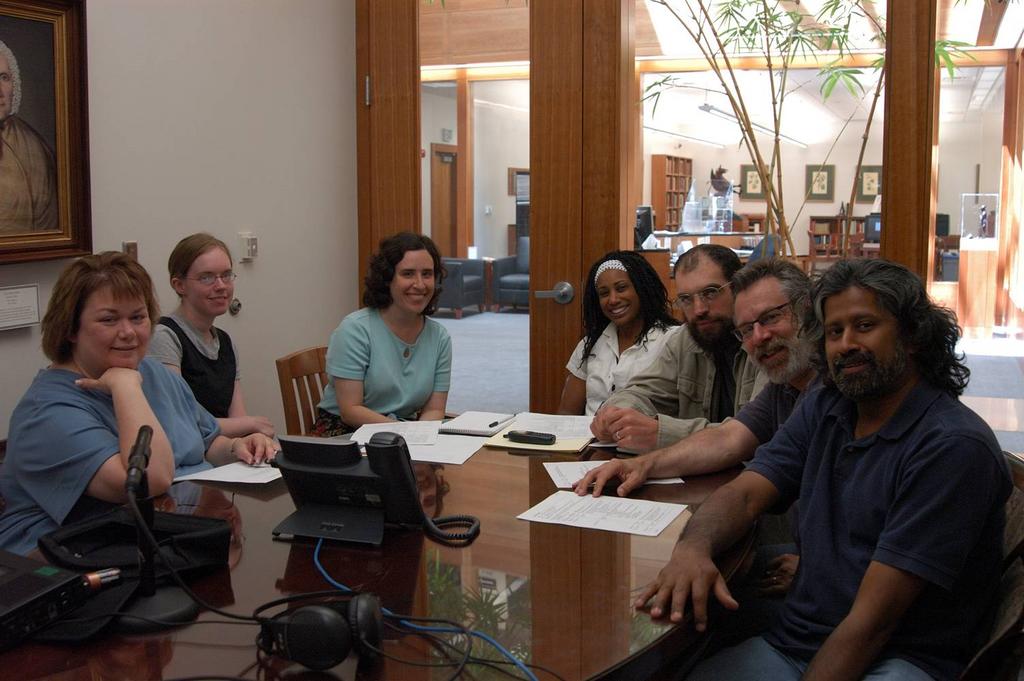
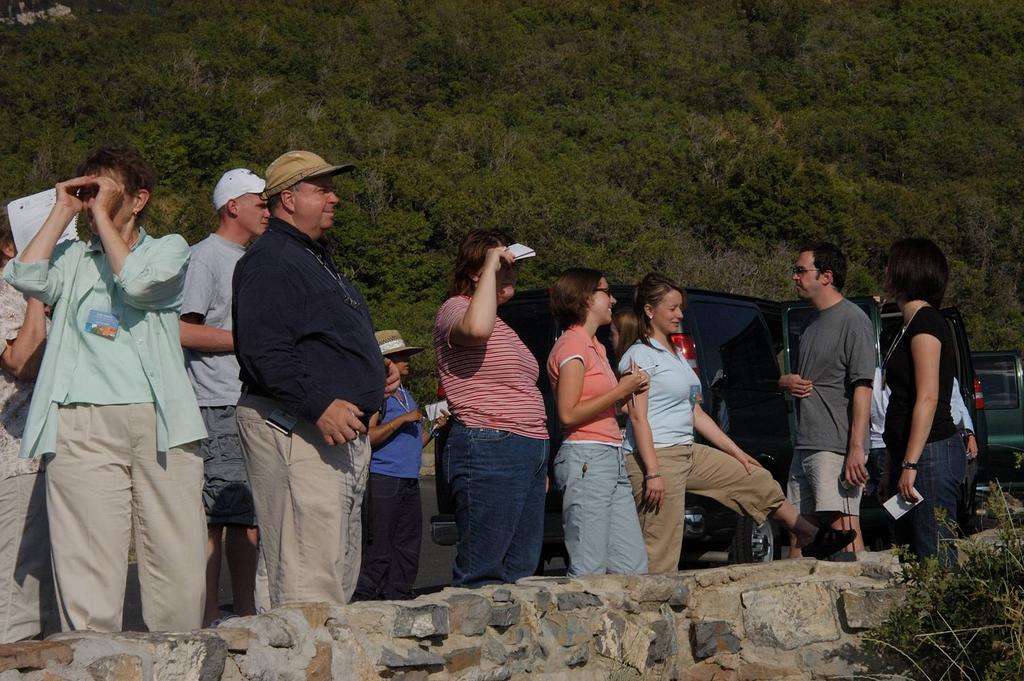
WESTCHESTER COUNTY, NY - How did you spend your summer? Many Americans spend summers barbecuing, enjoying outdoor sports, visiting new places and learning new skills. A select group of 15 participants in the intensive, three-week 2005 Field School for Cultural Documentation accomplished all that, documented other people pursuing those pastimes, and more!

Much more, in fact. Not only did they learn new skills, they applied them to conduct the ethnographic initiative, "Tradition Runs Through It: Environment and Recreation in Provo Canyon." This archive of tape-recorded interviews, photographs, fieldnotes and material culture (i.e., physical artifacts); associated exhibit at BYU's L. Tom Perry Special Collections; and presentations at the exhibit opening/reception on August 5 comprise the initial foundation for the Utah Heritage Project. Field School Co-Directors Kristi Young - Curator of the Wilson Folklore Archives at Brigham Young University, and David Taylor - Folklife Specialist at the Library of Congress American Folklife Center, said the 2005 Field School cohort did the best work they'd ever seen in the decade Field School has been offered! Not a bad for a bunch of greenhorns.

Broadcast synopsis:

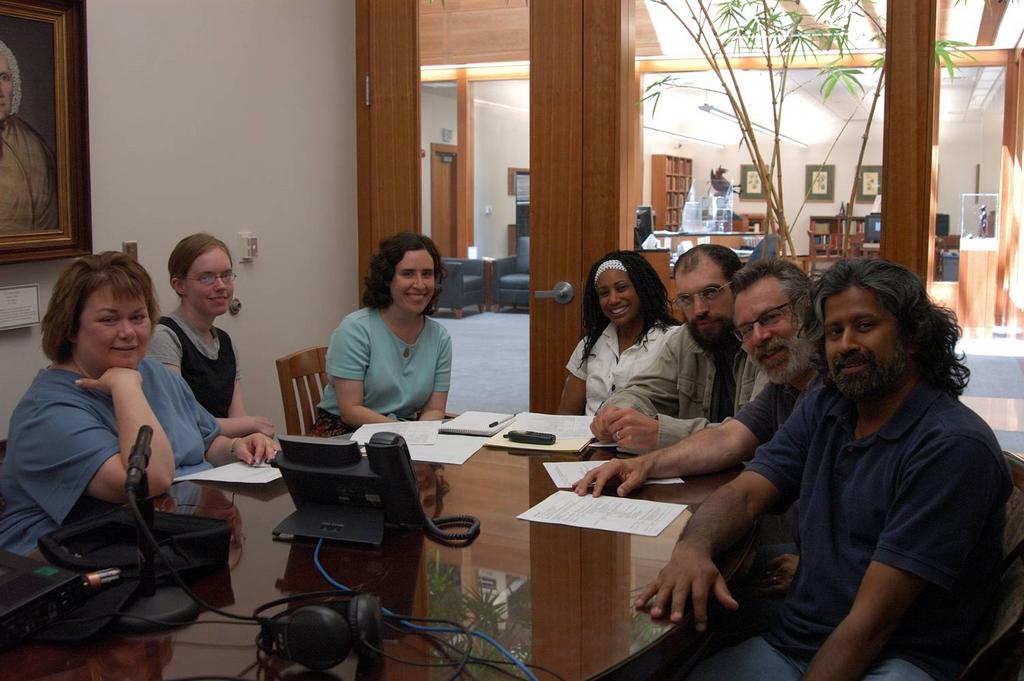
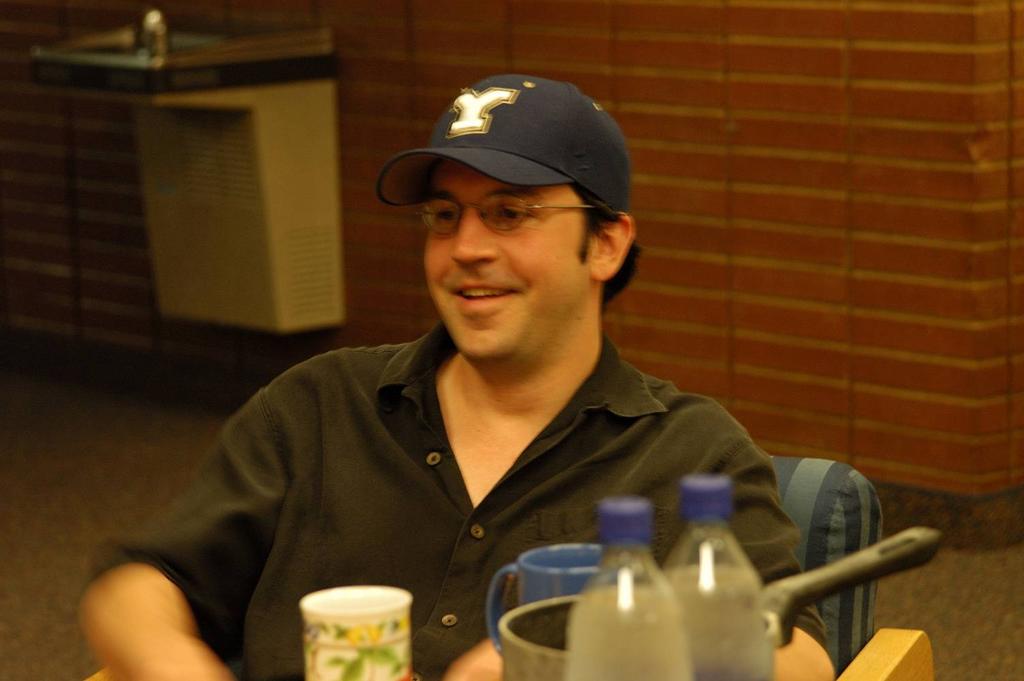
In today's follow-up to the July 27 Lisa Tolliver Show broadcast (which prominently featured cultural experts discussing folk life in general and how to preserve it), Young (far left in the photo on the left) and two of Tolliver's Field School classmates, Lisa Powell from Kentucky (second from the left in photo on the left), Steve Taylor from Pennsylvania (photo on the right) , and discussed their summer "vacation alternative" from the trainees' perspective. In contrast, the July 27 show more prominently featured descriptions of folklore in general and how to document it by Field School Co-Directors Young and David Taylor - Folklife Specialist at the Library of Congress American Folklife Center (AFC), Taylor's AFC colleagues Ilana Harlow and Guha Shankar, and documentary photographer Rich Remsberg.

Who participated in Field School 2005?

Alumni are adults from throughout the USA and various professions, who were interested in learning cultural documentation but lacked substantial prior experience. Successful applicants shared their rationale for attending Field School and plans for conducting future ethnographic projects.

What did they learn?

As the Field School website states:

The American Folklife Center, a leader in ethnographic field research for close to three decades, has developed a model for an intensive, three-week-long field school for cultural documentation, and then putting it into action through partnerships with educational institutions across the country. The Center’s field school, which was first held in 1995, offered hands-on training, for beginners, in such areas as research ethics, considerations for preliminary research, interviewing techniques, sound-recording techniques, documentary-photography techniques, ethnographic-observation techniques, fieldnote-writing techniques, the archival organization of multi-format ethnographic collections, and the development of public products and programs based on documentary material gathered in the field. The training, which is provided by members of the Center’s professional staff along with other experienced cultural specialists, includes lectures, hands-on workshops, discussions, and supervised team-based fieldwork with a carefully selected cultural community.


What did they document, exactly?

Field School participants organized into three-person teams to document five specific aspects of Provo Canyon's culture and environment. These included: fly fishing (Powell's team); Mormon dating practices (Taylor's team); the changing faces of Provo Canyon's environment, recreation and people (Tolliver's team); long-term Canyon communities Springdell and Wildwood; and long-standing local families, such as the Stewarts (who once owned substantial acreage in Provo Canyon, christened many landmarks with the family moniker, and continue to wield substantial influence locally).

To learn more:

To learn more about "Tradition Runs Through It," click here. To learn about applying to Library of Congress-sponsored Field Schools for Cultural Documentation, click here. To get ideas and assistance to conduct folklore projects click here.

Next broadcast:
Lisa Tolliver ShowAugust 24 at 1:30-2:00 pm, Eastern Time
New York Radio WVOX AM 1460 or www.wvox.com
Call-in line: (01) 914 636 0110
###

Saturday, August 06, 2005

Tolliver presents "Virtual communities: What, who, when, where, how, why and ... why not?"

Provo, UT - Lisa Tolliver presented "Virtual communities: What, who, when, where, how, why and...why not?" at the L. Tom Perry Special Collections Speaker Series at Brigham Young University ("BYU") on August 5, 2005. Accidentally doubled-booked by BYU for delivery as an Omnibus Lecture on August 4 and rescheduled for the next day, the interactive, multimedia presentation included the unveiling of a virtual community Tolliver established for the target audience. The site is a place that provides a user-friendly treasure trove of tools, information and resources and a space for collaboration and information sharing among the subjects and geographically dispersed ethnographers who participated in the 2005 Field School for Cultural Documentation and Utah Heritage Project, "Traditions Run Through It: Environment and Recreation in Provo Canyon" ("TRTI").

In response to the venue change, Tolliver made her presentation more interactive and integrated contributions from Field School instructors and participants. For example, she invited fellow Field School participant/TRTI researcher Lisa Powell to present the five stages of group development (forming, storming, norming, performing and adjourning) and co-facilitate a discussion of how those stages manifested themselves in the Field School/TRTI community. Additionally, she demonstrated how easy it was to share photographs using a slideshow compiled by Field School Instructor/Library of Congress Folklore Specialist Guha Shankar, PhD.
To:
Lecture details:

Date: Friday, August 4, 2005
Time: 12:00 - 1:00 pm
Location: DeLamar Jensen Lecture Room, 1130 HBLL
Abstract: http://www.writers.net/writers/books/27733
###

Wednesday, July 27, 2005

July 27, 2005 Lisa Tolliver Show broadcasts live from Provo, Utah


Provo, UT - Lisa Tolliver, fellow Field School for Cultural Documentation participant Lisa Powell from Kentucky, and their instructors discussed their work on "Tradition Runs Through It: Environment and Recreation in Provo Canyon." The instructors -- Library of Congress Folklore Specialists Ilana Harlow, Guha Shankar, and David Taylor; Wilson Folklore Archives Curator and Field School Co-Director Kristi Young; and documentary photographer Rich Remsberg -- defined folklore and ethnography and urged listeners to contact local experts who could help conduct cultural documentation projects of their own. Popular examples include: creating scrapbooks, videotaping oral histories and archiving collections of papers and photographs.

The three-week 2005 Field School for Cultural Documentation is sponsored by the Library of Congress American Folklife Center and Brigham Young University ("BYU"). Participants are learning the tools and techniques of ethnography and applying them to Provo Canyon on behalf of the Utah Heritage Project. On Friday, August 5 at 7 pm, they will present their work at the "Tradition Runs Through It" exhibit opening and reception at BYU's L. Tom Perry Special Collections. The entire collection of field notes, photographs, tape recorded oral histories and material culture collected and developed during Field School 2005 will be archived at the Wilson Folklore Archives.

Next broadcast:

"Lisa Tolliver Show"
Wednesday, August 10 at 1:30-2:00 pm, Eastern Time
New York Radio WVOX AM 1460 or www.wvox.com